Stories
Family-Centered Approach to Therapy Brings Boy From Tears to Words
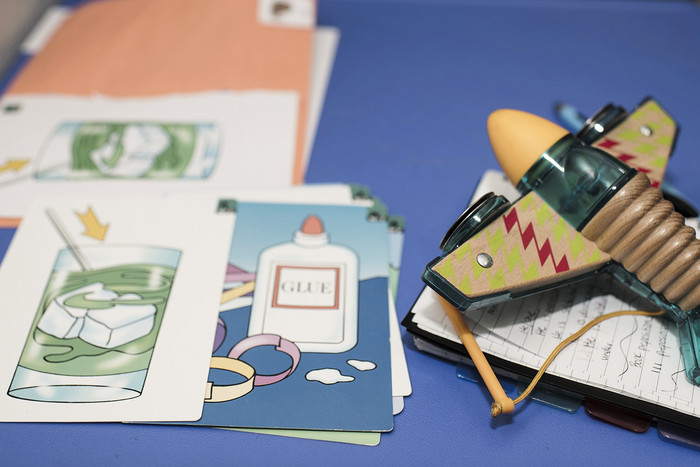
Toys, games, and other play-based activities are often central to speech therapy as means to help children communicate, but their use is very intentional, as in Jase's case.
The first time Jase Le came to speech therapy, it started and ended with tears. But that quickly changed. In less than a year, six-year-old Jase Le went from crying and running out of the speech therapy room to smiling and running into the speech therapy room on the way to his sessions. He went from being nonverbal, struggling to communicate with his parents and his peers, to saying full sentences like, "Mommy I want to go to the store."
This type of transformation is something we see often at CCLLC, and it is remarkable every time we get to be a part of it. Many children begin therapy as non-verbal communicators which often brings considerable stress to the family as communication is challenging. After speech therapy, children begin using more verbal communication. These transformations happen because of a team effort between therapist, family and child – in Jase Le's case, because of the patience, skill, and diligence of his therapist Katelin, the commitment of his parents, and Jase's own bravery and persistence.
Jase has been seeing Katelin Carollo, SLP, three times a week since the beginning of 2022, and his progress has been striking. "In the very beginning of our time together, Jase had a difficult time engaging in activities and going into the therapy room alone, often running to the waiting room to check if his parents were still there," said Katelin. "Now he runs into the therapy room with excitement and joy to see what new activity or game we're going to try and isn't afraid or anxious."
"Now he's excited to go," Jase's mom Thao explained. "Katelin made him feel really comfortable to engage with speech therapy by first playing games and things like that. She was really getting to know Jase and communicating with him in ways that he could."
Toys, games, and other play-based activities are often central to speech therapy as means to help children communicate, but their use is very intentional, as in Jase's case. "To support Jase's spontaneous language growth, I wanted to make sure the sessions felt like a safe place for him, where he could ask questions, request preferred toys, and share ideas and stories with me," said Katelin. "In the beginning, I let Jase guide the treatment sessions through play and then learned and observed which toys, characters from shows, and music he talked about and gravitated towards to use in future sessions. As I've built a relationship and rapport with Jase and his parents, there's a level of trust now that is really important for successful therapy and growth."
Involving parents and family members in a child's therapy is one of the hallmarks of our approach at CCLLC. As parents engage in their child's therapy, they can learn, practice, reflect and ask questions about the strategies we implement. Together as a team, we work with parents to improve family communication, engagement, and connection. "When all the family members and the child's support team are on board and trying each new skill, the progress is immeasurable," said Katelin. "The routine of learning something new in therapy and then trying and practicing it at home are fundamental to learning and growth and eventually lead to mastery."
Jase's parents both put in the time and effort to stay engaged with Jase's speech therapy journey, coming to each session ready to learn a new skill or try a new activity and then practice that at home with Jase. "Both of Jase's parents are an integral part of his success," said Katelin. "With their willingness to participate in each session, Jase is able to practice all these new skills at home and at school, instead of just during the sessions."
Practically, what does all of this progress look like for Jase and his family? It means being able to go on their family vacation to Hawaii without worrying how Jase will regulate and adapt, it means Jase saying "I want to go to the store" instead of yet another temper tantrum because he doesn't have the words to communicate. It also means Jase is now able to understand, answer, and ask questions, engage in more activities, tell stories, and participate in conversation that allows him to build relationships with his peers and make new friends. "All things we want for a child his age," said Katelin.